
Destination · June 2026
The best wedding venues in Goa — an honest guide
Goa's venue landscape is more layered than it first appears. Most couples arrive with a vision — beach, sunset, white linen — and leave having booked something quite different after they've seen the reality up close. That's not a bad thing. The venues that photograph beautifully and actually deliver on the day are rarely the ones on the first page of a Google search. Here's how the main venue types break down.
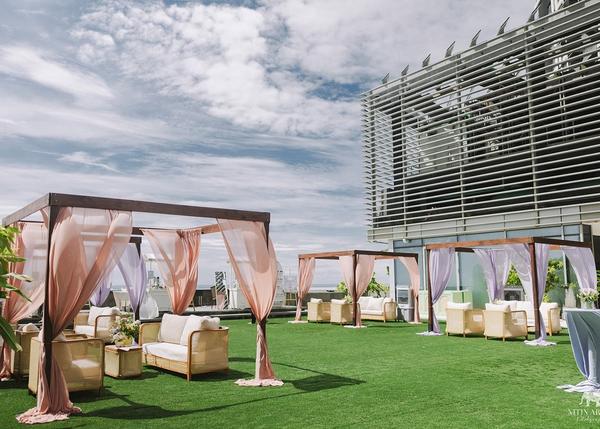
Beach villas and buy-out resort properties are Goa's strongest suit. The best of them — heritage-restored Portuguese mansions on private beachfronts in North Goa, boutique laterite resorts in the South — offer the whole event in one compound: ceremony, sangeet, wedding breakfast, and rooms for a core guest group. The practical advantage is significant: guests don't move, the lighting is designed around the property, and the planner controls every surface. The constraint is scale. Most of these properties comfortably accommodate 80–150 guests at a ceremony. Push beyond 200 and the setups start to feel crowded; the magic is in intimacy. Heritage mansions — there are a handful of genuinely beautiful colonial-era properties in the Bardez and Panjim belts — offer grandeur without the beachfront premium, and their stone-and-tile interiors handle artificial lighting exceptionally well for evening events.
Cliff venues and hilltop properties are a minority category in Goa but worth knowing. A handful of boutique properties in the far south sit on laterite bluffs with Arabian Sea views that nothing on the beach quite matches. They're harder to reach, which creates a transfer logistics layer, and they're exposed — wind can disrupt a mandap setup in ways that flat beachside venues handle better. But for couples who want something that doesn't look like every other Goa wedding photograph, they're genuinely distinctive. Boutique resort buy-outs deserve more consideration than they get. A well-chosen boutique property with 25–40 keys, bought out for two or three nights, gives you a fully private hotel where all hospitality flows through your team — catering, bars, transfers, décor — without sharing the space with strangers. For families who care deeply about the hospitality experience, this model often outperforms a larger property where half the guests are external.
Our approach to venue selection starts before we ever send a couple a venue deck. We ask about the guest count they can realistically hold to, the age and mobility profile of the family, how much movement they're comfortable asking guests to make between events, and what they most need the venue to feel like on the day. Only then do we narrow down the shortlist. A venue that looks wrong on paper can be the right answer once these questions are answered honestly — and a venue that looks perfect can be quietly wrong for a family that needs something more contained. The venue is not the wedding. It's the container. Getting the container right is the first decision.
Common questions
What is the best season for a wedding in Goa?+
October to February is the sweet spot. The air is dry, temperatures sit between 22–30°C, and outdoor ceremonies carry no rain risk. March to early May is still viable but increasingly hot and humid. June to September is monsoon season — atmospheric and cheaper, but outdoor ceremonies need covered contingency plans.
How far in advance should we book a venue in Goa?+
For peak season (November to February), the better beach villas and heritage properties book 12–18 months out. Boutique resorts with buy-out options go slightly faster. If you have a fixed date in the peak window, 14–16 months is the safe lead time. Off-season bookings can be confirmed in as little as 6–8 months.
Can we hold the ceremony on a beach in Goa?+
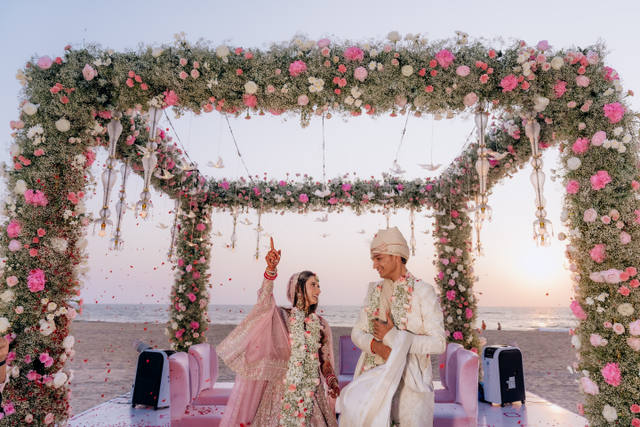
Yes, but the mechanics matter. Public beaches require permissions that are easier to navigate through an experienced local planner. Private beachfront villa properties often have designated ceremony lawns that run down to the beach — these are simpler to permit. Sunrise and evening ceremonies avoid the mid-day heat and photograph better. Always have a covered indoor backup ready, especially outside peak season.
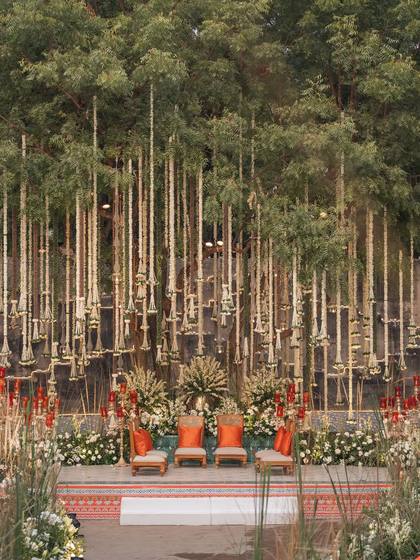
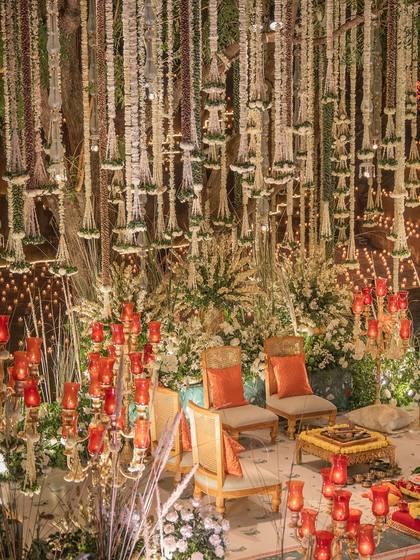
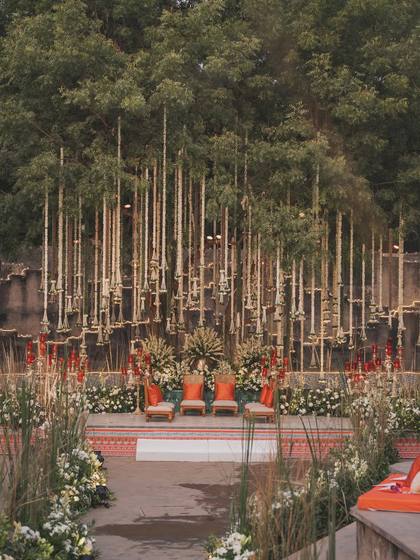
From our weddings
17 weddings we carried in Goa


Planning this destination?