Planning · July 2026
Reception After Court Marriage: Ideas, Costs and How to Plan the Celebration
Search for court marriage and you will find a hundred pages about paperwork — the Special Marriage Act, notice periods, witnesses, certificates. Search for what comes after and you will find almost nothing. Yet a growing share of the couples we plan for are already legally married when they walk into our office, and what they want is the celebration: the reception, the family evening, sometimes the full multi-day wedding, held weeks or months after the register was signed. This guide covers the part the legal sites skip — how to plan a reception after court marriage, what it can look like, and what it honestly costs.
Why split the legal ceremony from the celebration? Three reasons come up constantly. Interfaith and intercaste couples often marry under the Special Marriage Act first, letting the legal step happen quietly while families come around to the celebration. NRI couples marry on paper because visa and immigration timelines demand a certificate now, while a proper wedding needs a date everyone can fly for. And some couples simply want freedom from the muhurat calendar — the register office does not consult a panchang, and once you are legally married, neither must your party. All three are ordinary now, and none of them needs defending.
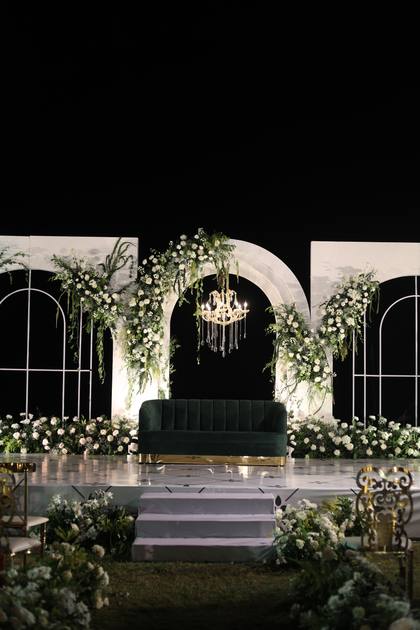
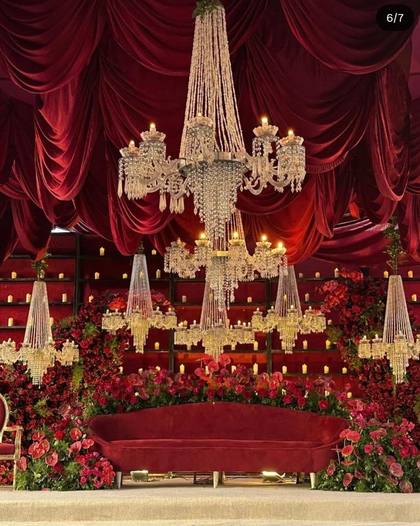
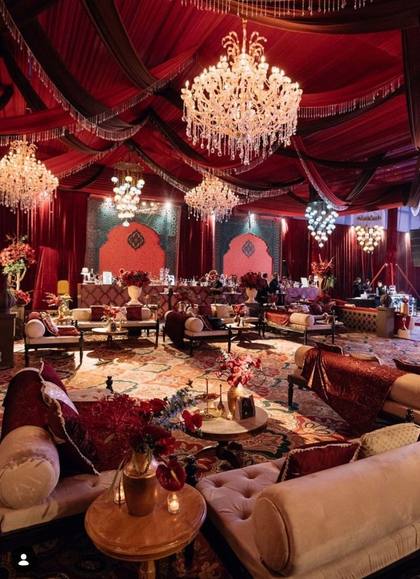
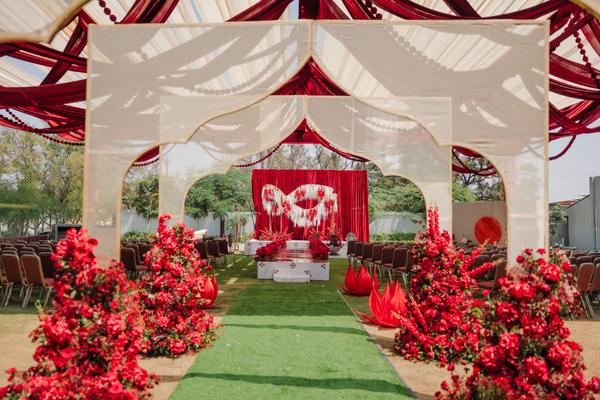
The celebration itself can be almost anything, because there is no template to obey. At one end: an intimate dinner for fifty in a beautiful city venue — one evening, one great menu, the people who matter. In the middle: a classic reception with cocktails, toasts and dancing. At the other end: a full multi-event celebration months after the court date — mehendi, sangeet, a ceremonial wedding day and reception — indistinguishable from any other wedding except that the legal formality is already done. We have planned every version. The only wrong choice is the one made from a sense of obligation rather than appetite.
On costs, Delhi NCR anchors from our own portfolio: intimate city celebrations start around ₹15-40 lakh depending on venue, guest count and how far the evening stretches, while full-scale receptions and multi-event celebrations run ₹40 lakh to ₹2 crore and beyond. The same rooms-and-plates arithmetic as any wedding applies — guest count is the biggest lever, venue tier the second. One genuine advantage of the split: with the legal date already secured, you can choose off-peak dates and non-Saturday evenings, where the same venue and menu can price meaningfully lower. These are planner-published 2025-26 estimates; quotes vary with dates and season.
Timeline is where court-married couples hold an advantage most never use. There is no pandit-dictated date, no auspicious-window scramble, no racing a visa deadline — the marriage is done, so the celebration can wait for the right moment. Six weeks later or a year later are both normal; we have planned both. That freedom buys real things: first-choice venues instead of whatever survived the muhurat rush, comfortable savings timelines instead of loans, guests who can actually attend, and a couple who arrive at their own party rested. If anyone asks whether a gap between wedding and reception is odd — it is not, and it never was.
How we structure these at Dream Weddings by TRIPN depends on one early question: do you want a party, or a wedding? Some couples want the full guest experience of a wedding without pheras — the varmala energy, the entrances, the sangeet — built around a reception rather than a ceremony. Others want the pheras done again, ceremonially: legally redundant, emotionally central, especially for parents and grandparents. Both are completely legitimate, and the honest conversation about which one you actually want — as opposed to which one you feel obliged to host — is where good planning starts. Everything else is logistics we carry.
If you are court-married and planning the celebration, start with the honest first conversation. Tell us your guest count, your city and what the day needs to feel like, and we will tell you the real number before you commit to anything — including whether the fifty-guest dinner might serve you better than the two-hundred-guest reception, or the reverse. The paperwork is done. The part worth planning carefully is the party.
Common questions
Can we have a reception after court marriage?+
Yes — completely, and it is increasingly common. There is no legal or social rule requiring the celebration to happen on the marriage date. Couples who marry under the Special Marriage Act, or ahead of visa timelines, routinely hold the reception weeks or months later. It can be an intimate fifty-guest dinner or a full multi-event celebration; the marriage certificate changes nothing about what you are allowed to host.
How long after court marriage can we have a reception?+
As long as you like — there is no deadline. We have planned receptions six weeks after the court date and celebrations a full year later, timed for family travel, savings or a season the couple loved. Since the legal marriage is complete, no muhurat or notice period constrains the party. Most couples land between two and nine months out, which is enough runway to book first-choice venues at sensible rates.
How much does a reception after court marriage cost?+
In Delhi NCR, intimate city celebrations run roughly ₹15-40 lakh depending on venue and guest count, while full-scale receptions and multi-event celebrations run ₹40 lakh to ₹2 crore and beyond — the same bands as any wedding of equivalent scale, drawn from our own portfolio. Guest count is the biggest lever. Figures are planner-published 2025-26 estimates; flexible, off-peak dates can bring the same venue meaningfully lower.
Can we still do pheras or a religious ceremony after court marriage?+
Yes. The pheras carry no additional legal weight once you are registered, but that is beside the point — many couples repeat them ceremonially because they matter emotionally, especially to parents and grandparents. We structure these celebrations either way: a full ceremonial wedding day with pheras, or the complete guest experience of a wedding built around a reception without them. Both are common and both are entirely valid.
Do we have to tell guests we are already legally married?+
That is entirely your call, and there is no wrong answer. Some couples announce the court marriage and frame the event as a reception; others simply invite guests to the wedding celebrations and let the paperwork stay private. Socially, the gap between a court marriage and its celebration has become unremarkable in metro India. We plan the event identically either way — the invitation wording is the only thing that changes.